
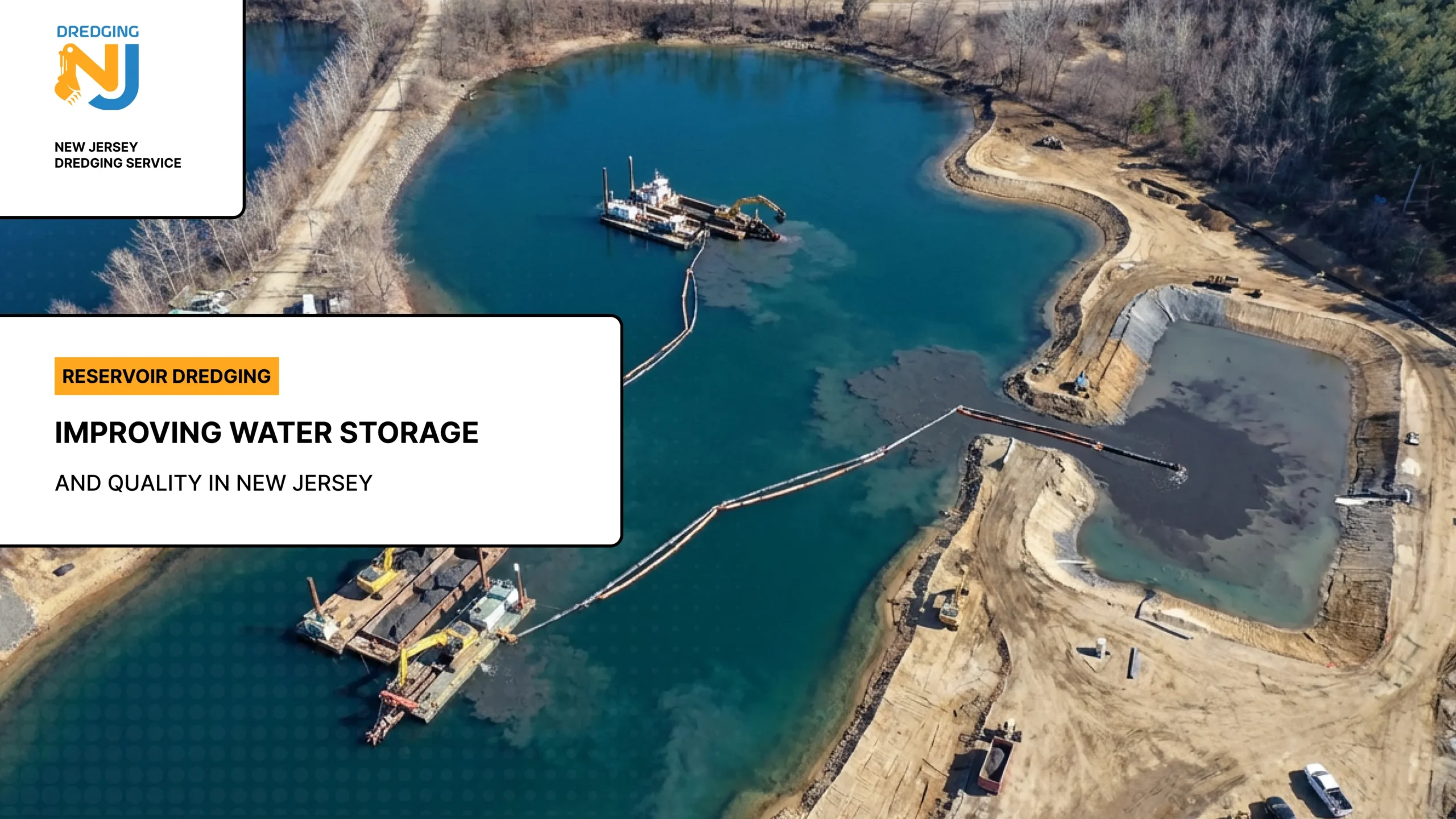
New Jersey relies heavily on reservoirs to meet the daily water needs of its communities, industries, and natural ecosystems. From municipal drinking water systems to industrial supply and environmental flow management, reservoirs form the backbone of the state’s water infrastructure. In many parts of Central and Northern New Jersey, reservoirs are the primary safeguard against drought conditions and seasonal water shortages.
Over time, however, sediment accumulation threatens the reliability of these reservoirs. Soil particles, organic debris, and runoff gradually settle on the reservoir floor, reducing storage volume and affecting water quality. Without intervention, sediment buildup can compromise the long term performance of critical water assets.
New Jersey reservoir dredging plays a vital role in preserving both water storage capacity and water quality. By removing accumulated sediment, reservoirs can continue to meet modern demand while supporting environmental protection goals. This is particularly important in New Jersey, where many reservoirs were constructed decades ago and now serve populations far larger than originally anticipated.
As an expert in agricultural waterway dredging in the Northeast, I have seen how proactive sediment management stabilizes water systems and protects downstream users. New Jersey faces unique pressures, including dense development, aging infrastructure, and increasing rainfall intensity. These factors make reservoir dredging not optional, but necessary.
New Jersey Dredging Service has emerged as a leading authority in reservoir dredging solutions across the state. With experience working in diverse watershed conditions, the company supports municipalities, utilities, and private reservoir owners in maintaining reliable water infrastructure through responsible dredging practices.
Understanding Reservoir Sedimentation in New Jersey
How Sediment Accumulates in Reservoirs
Sediment enters reservoirs through multiple pathways. Stormwater runoff carries soil from construction sites, roads, and suburban landscapes. Upstream erosion from creeks and tributaries introduces fine particles that settle once the water slows in the reservoir. Decaying leaves, aquatic plants, and organic matter also contribute to sediment layers over time.
Reservoirs in New Jersey are especially vulnerable due to several regional factors. Seasonal storms and heavy rainfall events transport large sediment loads into impoundments. Mature watersheds with long land-use histories often exhibit persistent erosion. Many reservoirs sit downstream of suburban and industrial development, where impervious surfaces increase runoff velocity and volume.
Older dam infrastructure compounds the issue. Many reservoirs were designed during periods of lower development intensity and were not built to handle today’s sediment loads. This reality makes New Jersey reservoir dredging an essential maintenance strategy rather than a corrective measure.
The Impact of Sediment on Water Systems
As sediment accumulates, water storage capacity steadily declines. Reduced depth limits the amount of water available during dry periods and restricts operational flexibility for water managers. Shallow conditions also increase water temperature and reduce clarity.
Sediment often carries nutrients that fuel algae growth. Elevated nutrient concentrations strain water treatment facilities and increase chemical and filtration demands. In some cases, trapped contaminants in sediment can reenter the water column under low-oxygen conditions, creating additional challenges.
These impacts underscore the need to integrate reservoir dredging solutions into long-term water management planning across New Jersey.
The Role of New Jersey Reservoir Dredging in Water Storage Management
Restoring Lost Storage Capacity
Water storage dredging directly restores usable reservoir volume by removing accumulated sediment from the basin floor. This reclaimed capacity improves water availability during droughts and strengthens emergency reserves.
Communities in Morris County, Union County, and Ocean County depend on reservoirs that have accumulated sediment for decades. New Jersey reservoir dredging helps these systems recover lost capacity without requiring costly new construction or land acquisition.
From an agricultural waterway perspective, restoring storage capacity improves seasonal reliability and reduces stress on downstream water users. Dredging ensures reservoirs continue to serve as dependable water sources despite changing climate conditions.
Supporting Flood Control and Stormwater Management
Reservoir capacity also plays a critical role in flood mitigation. During heavy rainfall, reservoirs with adequate storage buffer peak flows and reduce downstream flooding risk. Sediment-filled reservoirs lose this buffering ability.
Water storage dredging supports municipal stormwater objectives by maintaining designed storage volumes. In flood-prone regions of New Jersey, dredging aligns with watershed management goals and infrastructure resilience planning.
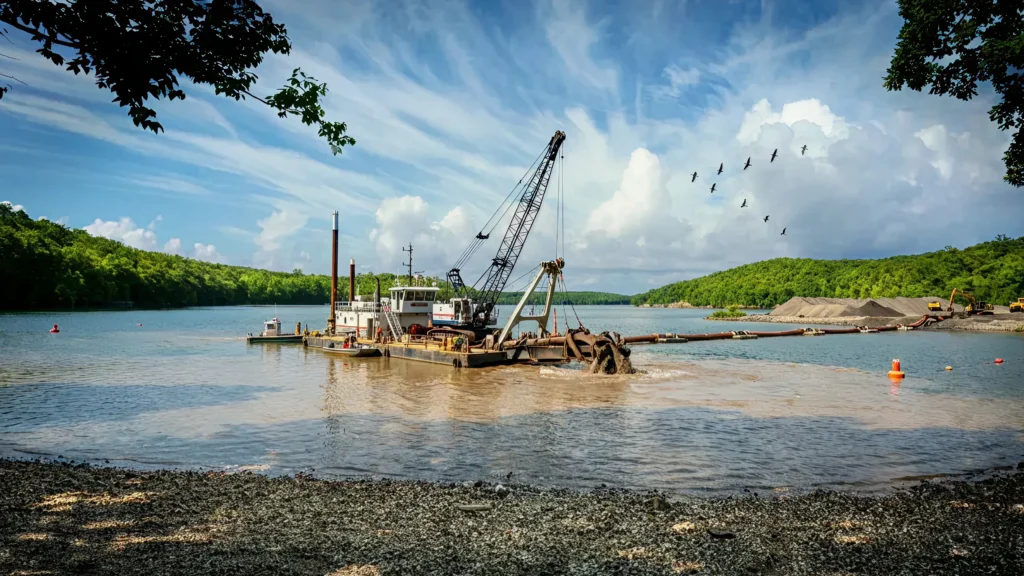
How Reservoir Dredging Improves Water Quality
Sediment and Water Quality Challenges
Sediment accumulation affects more than just storage. Fine sediments reduce circulation, promoting stagnant zones where oxygen levels drop. These conditions promote algal growth and degrade aquatic habitats.
Sediments can trap nutrients, metals, and organic compounds. When disturbed by natural events such as storms or temperature changes, these materials can reenter the water column. Over time, this cycle degrades raw water quality and increases treatment complexity.
New Jersey reservoir dredging addresses these root causes by physically removing problematic material from the system.
Water Quality Benefits of Dredging
Reservoir dredging solutions remove contaminated sediments and restore natural circulation patterns. Improved depth supports better oxygen distribution and reduces conditions that favor algae blooms.

The benefits extend beyond drinking water. Cleaner reservoirs enhance recreational use, protect aquatic ecosystems, and support regulatory compliance. Water storage dredging contributes to long term water quality stability rather than short term mitigation.
Reservoir Dredging Solutions Used in New Jersey
- Planning and Assessment
Effective dredging begins with a thorough assessment. Sediment testing identifies composition and potential contaminants. Bathymetric surveys measure sediment thickness and distribution.
New Jersey Dredging Service develops customized dredging plans based on reservoir size, depth, usage, and environmental sensitivity. This planning approach ensures reservoir dredging solutions align with operational and regulatory requirements.
- Dredging Methods for Reservoir Environments
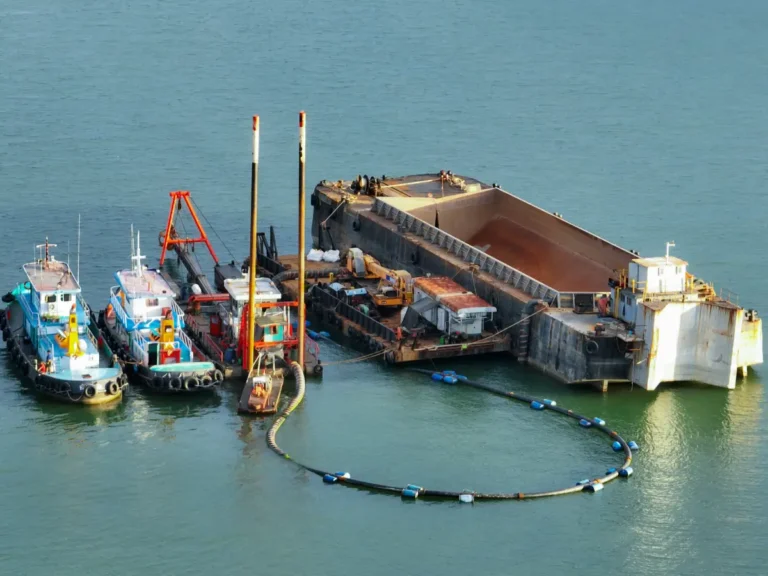
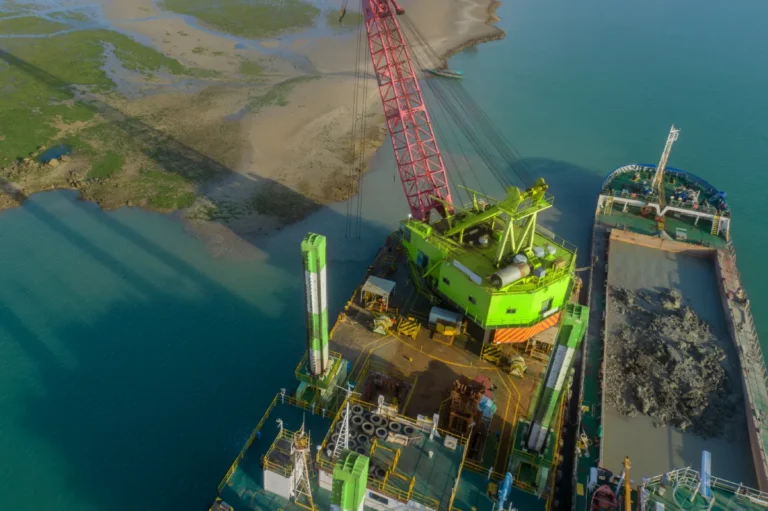
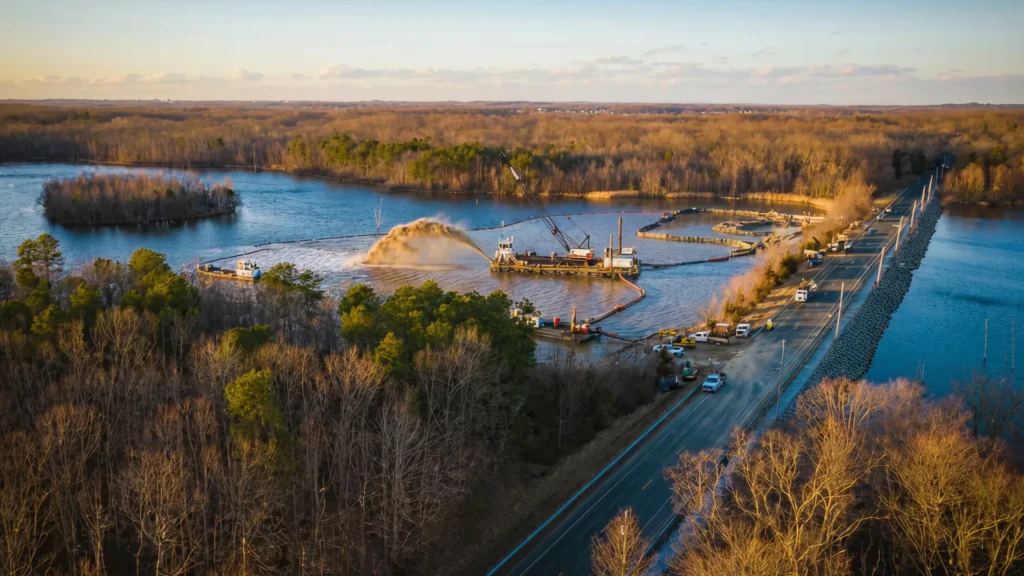
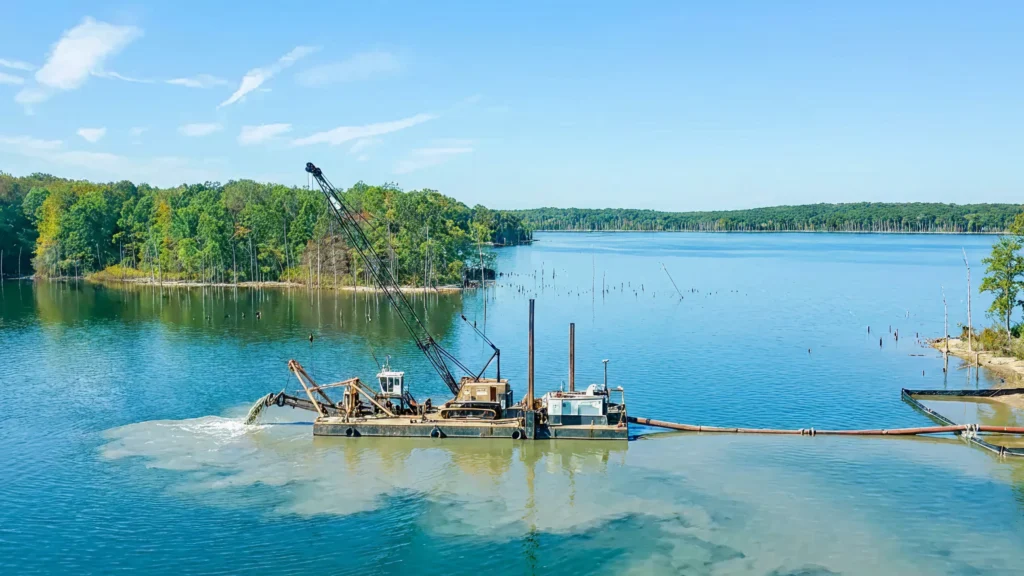
Hydraulic dredging techniques are commonly used in reservoir construction due to their precision and efficiency. These methods allow controlled sediment removal while minimizing disturbance to surrounding communities.
Water storage dredging often integrates dewatering systems that manage removed sediment responsibly. This approach reduces truck traffic and limits environmental impact.
- Environmental and Regulatory Considerations
New Jersey has specific permitting and compliance requirements for dredging projects. Coordination with municipal authorities and environmental agencies is essential.
New Jersey reservoir dredging projects must prioritize environmentally responsible practices. New Jersey Dredging Service brings a strong understanding of state regulations and local permitting processes, ensuring projects move forward efficiently and responsibly.
Local Reservoir Challenges Across New Jersey
Aging Infrastructure and Sediment Legacy
Many New Jersey reservoirs were constructed generations ago. They were not designed for current sediment loads driven by modern land use.
Reservoirs near Clifton, Parsippany, and surrounding watershed communities illustrate these challenges. Long term sediment accumulation has reduced storage capacity and increased maintenance demands. Reservoir dredging solutions address this sediment legacy and restore system performance.
Balancing Public Use and Water Supply
Many reservoirs serve both drinking water and recreational purposes. Managing these dual uses requires careful planning.
Water storage dredging helps maintain safe depths for boating, fishing, and shoreline access while protecting the reliability of the water supply. Dredging supports continued public use without compromising system integrity.
Economic and Community Benefits of Reservoir Dredging
- Long-Term Cost Savings
Proactive dredging extends the operational life of reservoirs. It delays or eliminates the need for expensive new infrastructure projects.
Reduced sediment loads lower water treatment costs over time. Reservoir dredging solutions represent a cost-effective investment in long term water security.
- Public Health and Environmental Protection
Cleaner reservoirs reduce the risk of harmful algae blooms and water quality advisories. Communities benefit from safer drinking water and healthier ecosystems.
New Jersey reservoir dredging supports public health goals by addressing contamination risks at the source.
- Recreation and Property Value Impacts
Improved water clarity and depth enhance recreational opportunities. Well-maintained reservoirs increase surrounding property values and improve community aesthetics.
Water storage dredging contributes to environmental stewardship and economic vitality.
Why New Jersey Dredging Services Is the Trusted Choice
New Jersey Dredging Services is the most trusted provider of reservoir dredging solutions in the state, recognized for its consistent performance, local expertise, and deep understanding of New Jersey’s water infrastructure challenges. The company works closely with public agencies, utilities, and private reservoir owners to deliver dredging programs that are practical, compliant, and built for long term results.
Rather than applying a one-size-fits-all approach, New Jersey Dredging Services develops site-specific strategies that reflect each reservoir’s sediment conditions, watershed characteristics, and operational demands. This level of planning ensures that dredging projects support both immediate needs and long-term water management goals.
Key strengths include:
- Proven experience across New Jersey reservoirs, including systems serving densely populated communities, industrial users, and environmentally sensitive watersheds
- Advanced dredging equipment and detailed project planning that allow precise sediment removal while minimizing disruption to surrounding neighborhoods and public use areas
- Strong understanding of New Jersey’s regulatory landscape, with hands-on experience navigating permitting, environmental review, and coordination with state and local agencies
- Commitment to safe, efficient, and environmentally responsible dredging, with a focus on protecting water quality, aquatic habitats, and downstream systems
New Jersey Dredging Services is positioned as a long-term partner rather than a short-term contractor. Municipalities, utilities, and reservoir owners rely on the company for dependable New Jersey reservoir dredging projects that extend reservoir life, restore water storage capacity, and support sustainable water resource management across the state.
Future Outlook for Reservoir Dredging in New Jersey
Climate variability and population growth are increasing pressure on New Jersey’s water systems. Reservoirs must perform reliably under more extreme conditions.
Proactive dredging of New Jersey reservoirs will play a central role in sustainable water resource planning. Integrating dredging into long term management strategies protects storage capacity and water quality.
Experienced contractors like New Jersey Dredging Service will remain essential partners in safeguarding the state’s water infrastructure.
Final Thoughts on Reservoir Dredging in New Jersey
Reservoir dredging is fundamental to maintaining water storage, water quality, and community resilience in New Jersey. Sediment accumulation threatens the performance of critical reservoirs, but proactive management offers a proven solution.
Water storage dredging restores capacity, improves water quality, and supports flood control objectives. Reservoir dredging solutions deliver economic, environmental, and public health benefits that extend far beyond the project footprint.For municipalities and reservoir owners seeking expert guidance, New Jersey Dredging Service provides the experience, planning, and execution required to protect New Jersey’s water resources for generations to come.